
The Los Angeles port record for September 2026 is a useful signal for importers planning container arrivals, but it is not evidence that a particular terminal or trucking lane is congested. The Port of Los Angeles reported on October 9 that it handled 1,042,652 twenty-foot equivalent units (TEUs) in September, its busiest month on record. The port's monthly statistics table breaks out the total, including approximately 545,696 loaded import TEUs. A TEU is a counting unit, not a count of individual pickups or available trucks.
What the record does and does not tell a shipper
The port says its September total exceeded the previous monthly record by more than 20,000 TEUs. This describes cargo handled across a month. It does not tell us when any given container was discharged, released, made available for pickup or received at a distribution center. It also does not establish current truck capacity, terminal dwell, appointment availability, inland transit time or detention exposure. Those require shipment-level and time-stamped operational information.
The planning question is narrower and more useful: when our container becomes available, are all parties ready for the next handoff? A volume headline should prompt a check of actual milestones, not an assumption that every shipment faces the same conditions.
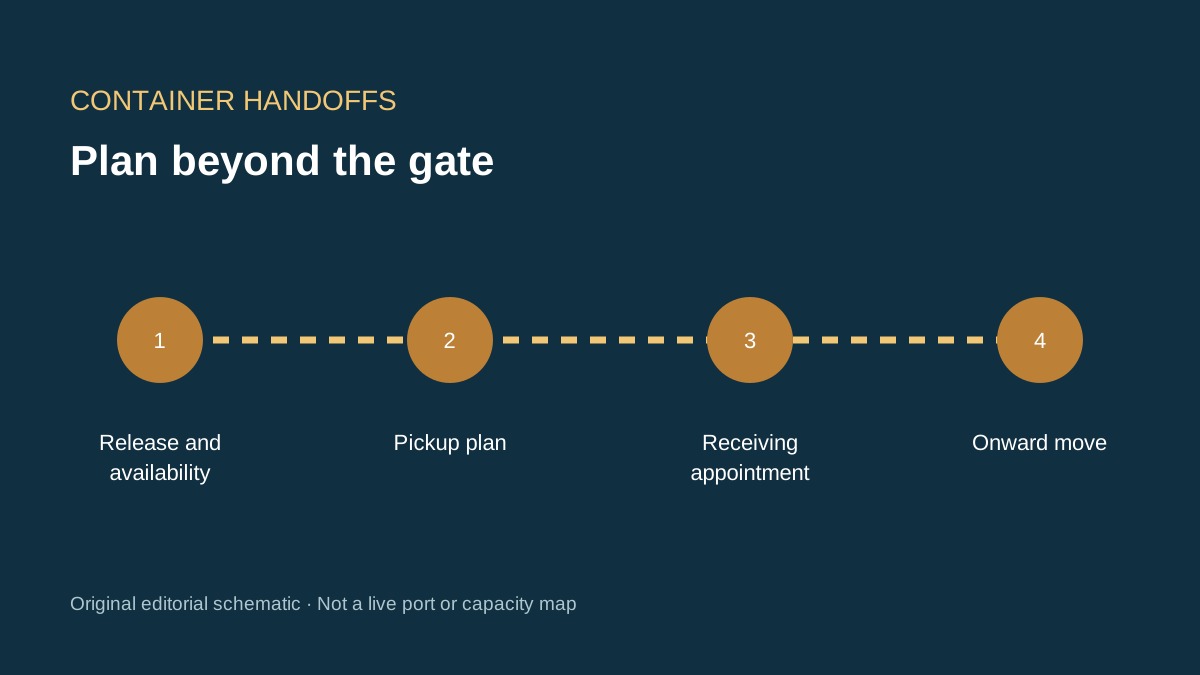
Four checks before the receiving date is fixed
- Confirm release and availability separately. Ask the responsible party for the latest container and document status, terminal availability and any relevant hold before scheduling a pickup around a projected arrival.
- Align pickup with the receiver. Confirm that the receiving site can accept the cargo on the planned date, including its appointment rules, unloading window and any container or chassis return constraints that apply to this shipment.
- Clarify the next move. If freight will move beyond the port region, identify whether it will go in the container to the receiver or needs a separately arranged transload and inland move. Put the responsible party and transfer point in writing.
- Set an exception contact. Decide who will notify the importer and receiving site if availability, pickup or the warehouse appointment changes. Reconfirm the plan using live shipment information rather than the port's monthly total.
This is a coordination checklist, not a claim that delays are occurring at Los Angeles or that Capernaum has capacity on a specific lane. For a primer on the short container move and its many handoffs, see What Is Drayage? A Container-Move Guide. If you need an operational conversation about a particular shipment, share the cargo, origin, destination and timing through Capernaum's contact page; the team can assess fit.
Source and scope
The port release was published October 9, 2026 and reports September 2026 activity. Its statistics page shows September totals but does not provide a page-level publication timestamp. The dated release establishes when these figures were publicly announced. Figures here are rounded from that release and cross-checked against the port's own table, not independently audited. The checks above are editorial guidance, not a port performance forecast or a representation of any Capernaum customer's operation.