
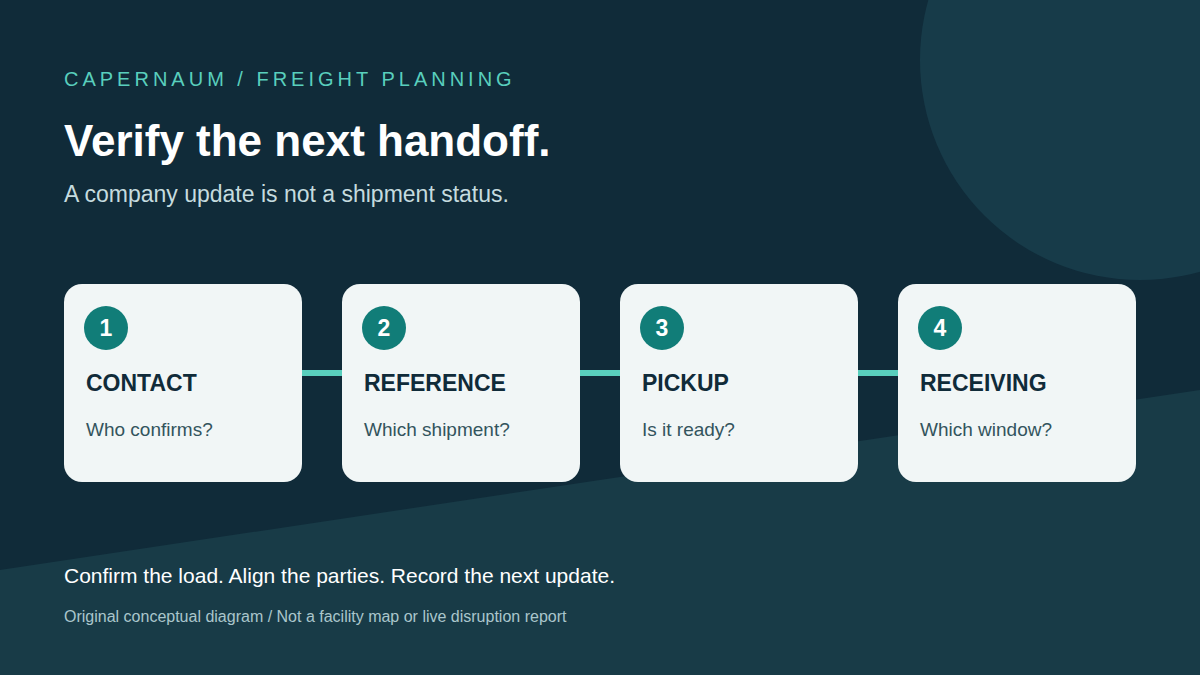
DSV's latest integration update offers U.S. shippers a practical reminder: a logistics company's financial progress and an individual shipment's readiness are different things. Before changing an inland move, confirm the contacts, references and receiving arrangements attached to that load.
The immediate news is DSV's third-quarter update. In its October 21 company summary, DSV described continuing earnings growth in Air & Sea and Contract Logistics, operational recovery in its Road division, and a Schenker integration that generally continued as planned.
FreightWaves' October 26 report adds a more specific operational distinction. It reported that integration-related service disruptions in Europe had weighed on DSV's trucking business, while operations normalized toward the end of the quarter. That geographic qualification matters: the report does not establish a disruption to a particular U.S. shipment, port or warehouse.
What this update does and does not tell a shipper
The company summary and the independent report describe progress at a network and business level. They do not confirm the status of a container, a pickup appointment or a receiver's unloading slot. Nor do they establish a new U.S. trucking rate, guaranteed capacity or a need to switch providers.
For a U.S. importer or distributor whose freight passes through multiple providers, the useful question is narrower: has anything changed in the instructions for the next physical handoff? A change in an organization does not automatically mean a change in a shipment. Confirm the actual arrangements rather than treating an integration headline as a delay alert.
Check four details before the inland move
- The operating contact. Identify who owns the next status confirmation and who can resolve a mismatch. If a contact has changed, verify the replacement through an established channel rather than relying only on an unfamiliar message.
- The shipment reference. Make sure the forwarder, inland transportation provider and receiving facility can match the same load. Confirm any replacement reference with the party responsible for issuing it.
- Pickup readiness. Separate an estimated arrival from confirmation that the freight is available for collection. The responsible parties should confirm readiness before the truck is committed to the pickup.
- The receiving appointment. Check the facility address, receiving window, unloading requirements and appointment reference. A revised pickup plan may require a revised delivery appointment; do not assume the original slot still works.
For container freight, our warehouse preparation guide explains why the receiving plan belongs in the conversation before delivery day. If a move includes a transload or cross-dock, confirm that facility's instructions and the onward transportation plan separately.
Keep the commercial terms separate from the headline
If a provider proposes a change to a move, ask for a written explanation of what changes and what remains in place. Confirm the scope of the quote, its validity and any handling or storage items that are priced separately. A corporate earnings announcement does not revise the terms of an existing shipment agreement.
A short handoff record can be more useful than a broad market prediction: current shipment reference, confirmed next contact, pickup status, receiving window and the person responsible for the next update. This is general coordination guidance, not a finding that DSV customers need a different plan or that any particular shipment is at risk.
For an upcoming U.S. container or domestic freight move, contact Capernaum with the origin, destination, cargo details and receiving requirements. Timing, coverage and pricing need shipment-specific confirmation.
Source note
Prepared October 27, 2026 from DSV's public company summary dated 2026-10-21 and FreightWaves' reporting dated 2026-10-26. The European service-disruption detail is attributed to FreightWaves; no corresponding U.S. disruption is asserted. The linked primary summary is not the full investor report. No interviews, private shipment information, publisher artwork or proprietary capacity data were used. The accompanying original diagram is conceptual, not a map of DSV facilities or a depiction of actual disruptions.
Company summary: 2026-10-21. Reporting publication date: 2026-10-26.