
FedEx Freight's latest transition results give U.S. LTL shippers a useful reminder: carrier revenue growth and the price of a particular shipment are different measures. Before using an earnings headline to judge a quote, separate fuel, freight characteristics and the actual service requirements.
In its October 29 results announcement, FedEx Freight reported a one-time four-month period ending September 30, 2026, covering June through September as it moves to calendar-year reporting. This is not simply a July-to-September quarter. Trucking Dive's October 30 report also described the carrier's customer-retention and transition focus following its June 1 separation.
What the four-month results actually show
For the four-month period, the company reported revenue growth of 9.2% year over year. Average daily shipments declined 1.4%, while tonnage per day was flat. Those figures describe the company's reported business over a defined period, not the current availability of an individual terminal or lane.
The release also reported revenue per shipment up 10.1%, compared with a 1.6% increase when fuel was excluded. FedEx Freight attributed overall revenue growth primarily to fuel surcharge revenue, higher shipment weight, an additional operating day and higher base revenue per hundredweight, partly offset by softer volumes.
That distinction matters when comparing LTL costs. Neither revenue-per-shipment measure is a published customer rate increase. Differences in shipment mix and weight can change a company-wide average even when a particular shipper's contractual pricing follows a different path. The results do not establish what any one customer will pay.
Compare the load, not just the headline
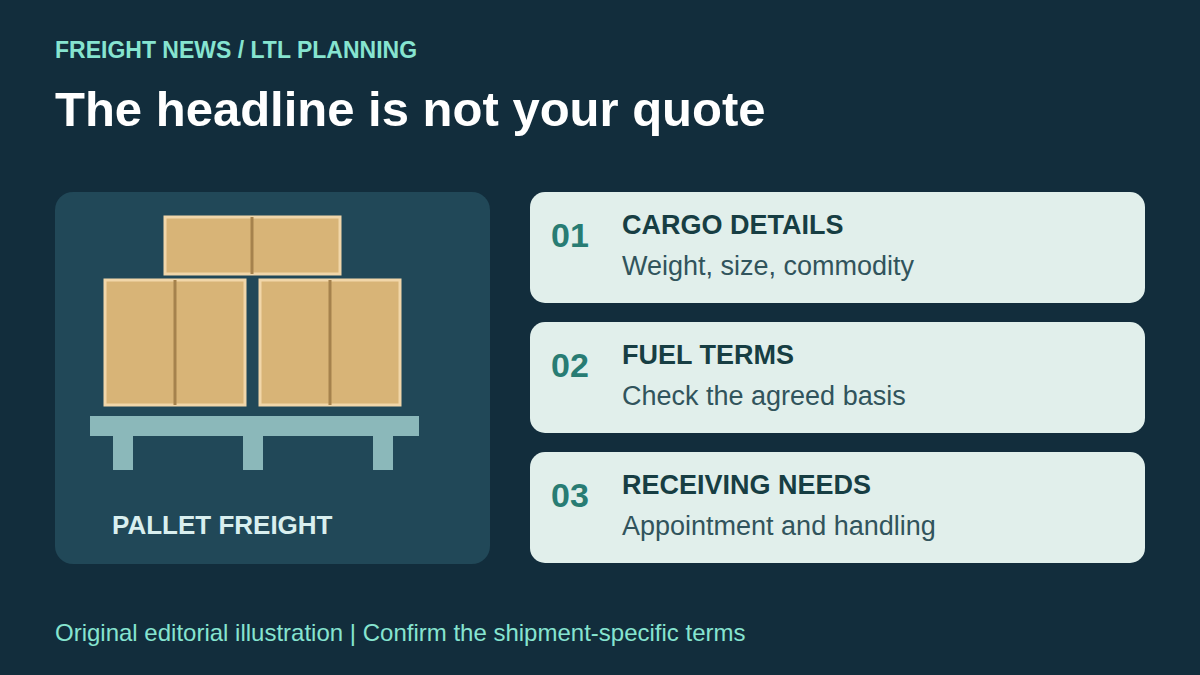
For a distributor moving pallets from a warehouse, a useful quote comparison begins with the same shipment description on both sides. Record pallet count, packaged dimensions, gross weight, commodity and the pickup and delivery locations. Confirm any required freight classification with the quoting provider rather than guessing it from an earnings report.
- Separate the components: identify the transportation charge, applicable fuel terms and any quoted additional services. A company-wide fuel contribution does not determine the surcharge in your agreement.
- Match the receiving conditions: specify whether a delivery appointment, liftgate or other handling arrangement is needed. Ask which requirements are included and which could add charges.
- Confirm the timing: distinguish an estimated transit time from any specifically agreed service commitment. A financial update is not a shipment-level delivery promise.
- Keep the quote traceable: retain the quote reference, validity period and the assumptions used to price the move before releasing freight.
Keep the warehouse handoff in the plan
For imported freight moving onward after container delivery or transloading, the domestic leg needs its own confirmation. Check when the pallets will be available, who releases them, how they will be loaded and when the receiving warehouse can accept them. Do not book the next step solely because an upstream milestone was expected.
Our warehouse preparation guide covers related receiving questions. The same discipline applies to a smaller pallet shipment: the cargo description, pickup readiness and receiving window should agree before the truck is dispatched.
The operating takeaway is narrow. Use the release to understand the carrier's reported transition period, then evaluate a live LTL move on its own terms. For a U.S. inland shipment, contact Capernaum with the cargo, origin, destination and receiving requirements. Coverage, timing and price need shipment-specific confirmation; this article does not announce a carrier partnership or reserved capacity.
Sources and scope
Prepared October 31, 2026 from FedEx Freight's public release dated 2026-10-29 and Trucking Dive's independent reporting dated 2026-10-30. Figures above refer to the company's four-month transition period, not solely the third quarter. Company results are attributed to the issuer; the shipment checklist is original editorial analysis. No interviews, private customer information or proprietary rate data were used. The original illustration is conceptual, not a depiction of a carrier's facilities or an actual quote.