
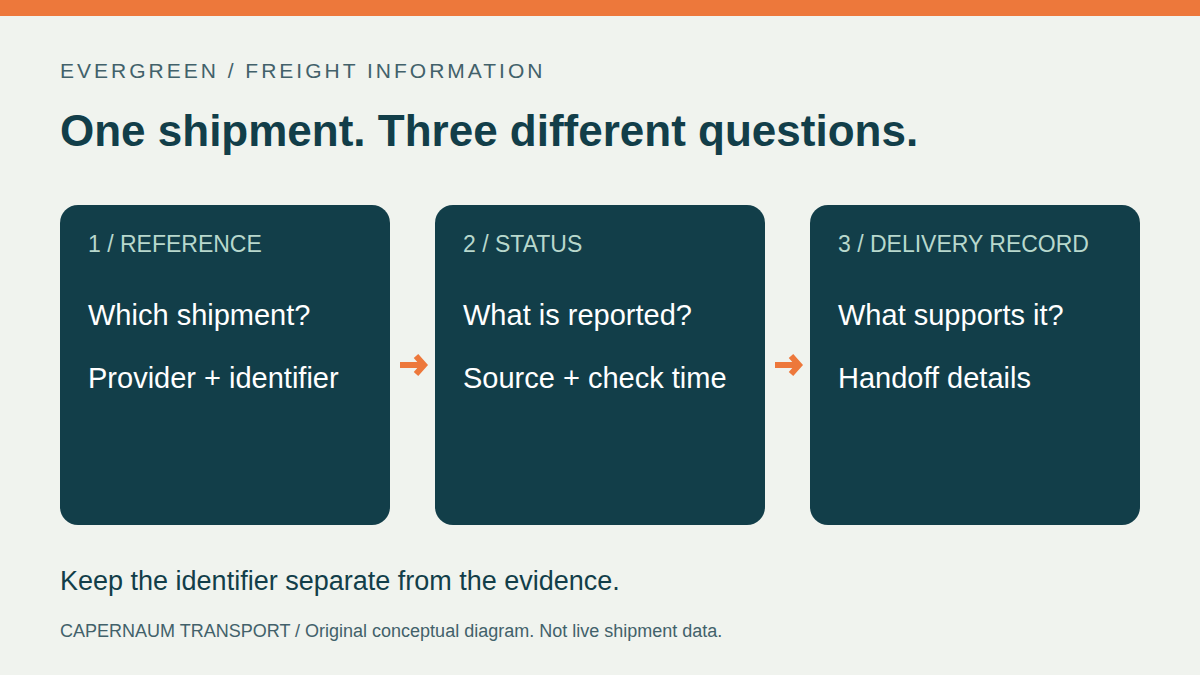
Evergreen logistics explainer. Freight tracking works better when a coordinator separates three questions: which shipment are we discussing, what is its reported status, and what record supports the delivery update? A number helps identify a move. It should not replace the other two answers.
For shippers arranging LTL or regional freight, our recommendation is to keep a small reference map with each shipment. Record the provider, the type of identifier, the exact identifier and the movement it belongs to. Then attach dated updates and the relevant delivery record rather than forwarding a bare number as if it explained the whole trip.
What the PRO reference establishes
The Estes transportation glossary defines its PRO number as a preassigned, ten-digit freight bill number used to track a shipment. The important distinction for this guide is its identification function. The definition does not turn the number itself into a pickup timestamp or a delivery receipt.
That is a named carrier reference, not a universal format rule. Do not remove characters or force another provider’s identifier into a ten-digit pattern on the strength of this example. Ask the selected provider which reference its tracking tool or service team needs, and preserve the reference as supplied.
A delivery record answers a different question
In the same glossary, Estes describes proof of delivery as carrier-supplied information that includes the signer’s name, delivery date and time, and other delivery-related details. This is different information from a tracking identifier.
Our operational recommendation is to request the appropriate delivery record when the receiving team needs evidence of the handoff. Check that it relates to the intended shipment before passing it along. This article does not determine the legal effect of a signature, settle a shortage or damage question, or interpret a carrier’s claims terms.
Build a reference map, not a list of unlabeled numbers
A useful internal note can contain the customer’s order reference, the shipper’s shipment reference and the provider’s tracking reference in separate labeled fields. Those labels are a proposed coordination format, not a promise that every carrier accepts every reference for online searches.
- Shipment identity: Note the origin, destination, planned movement date and packed unit count so the team can distinguish similar moves.
- Provider and identifier: State who supplied the reference and what they call it. Keep the exact value with its label.
- Coverage: Record which movement or portion of the order the reference is intended to cover. Confirm any uncertainty with the provider.
- Latest update: Keep the reported status, who supplied it and when it was checked separate from the identifier.
- Evidence: Link the relevant delivery record when available, or state that it has been requested and is still outstanding.
When one order becomes two moves
Consider a fictional distributor sending part of an order on Monday and the balance on Wednesday. An email says “the order is delivered” and includes one provider tracking reference. The receiver needs to know whether that statement covers the first move or both.
The next step is not to guess from the order number. Match each dispatched portion to its confirmed shipment reference, then check the status and delivery information for each move. If only the first movement has supporting delivery information, say so. This is an original planning example, not a report of a real shipment or a claim about any carrier’s systems.
The same discipline is useful when several customer orders are planned together. Ask which orders and quantities the provider-confirmed movement covers. Do not assume a one-to-one relationship between a customer order and a tracking reference unless the actual shipment record establishes it.
Write the update so the next person can act
Instead of “Delivered, see tracking number,” a clearer internal update might say: “First dispatched portion: provider reports delivery on the stated date. Delivery record requested. Second portion: separate movement, status awaiting confirmation.” Use real shipment-specific facts when preparing an actual update; the wording here is only an example.
If a lookup returns no result or an unexpected shipment, confirm the provider, reference type and shipment match through an established contact. Do not declare the freight missing, collected or delivered simply from the success or failure of one lookup. Keep unresolved questions visible and assign a person to obtain the missing confirmation.
For the contents of each packed unit, see our packing-list package-map guide. To discuss a freight move with Capernaum, share the cargo, route, timing and receiving requirements. This guide does not announce a Capernaum tracking platform, integration or guaranteed visibility service.
References and scope
Published 2026-11-07. The Estes transportation glossary is an undated reference page directly checked November 7, 2026, not a new announcement. Its PRO and proof-of-delivery entries support the two attributed definitions above. Reference mapping, split-order examples and update wording are original editorial recommendations. No source prose, publisher imagery, customer data, legal interpretation, live shipment status, rate or capacity claim is reproduced or asserted.