
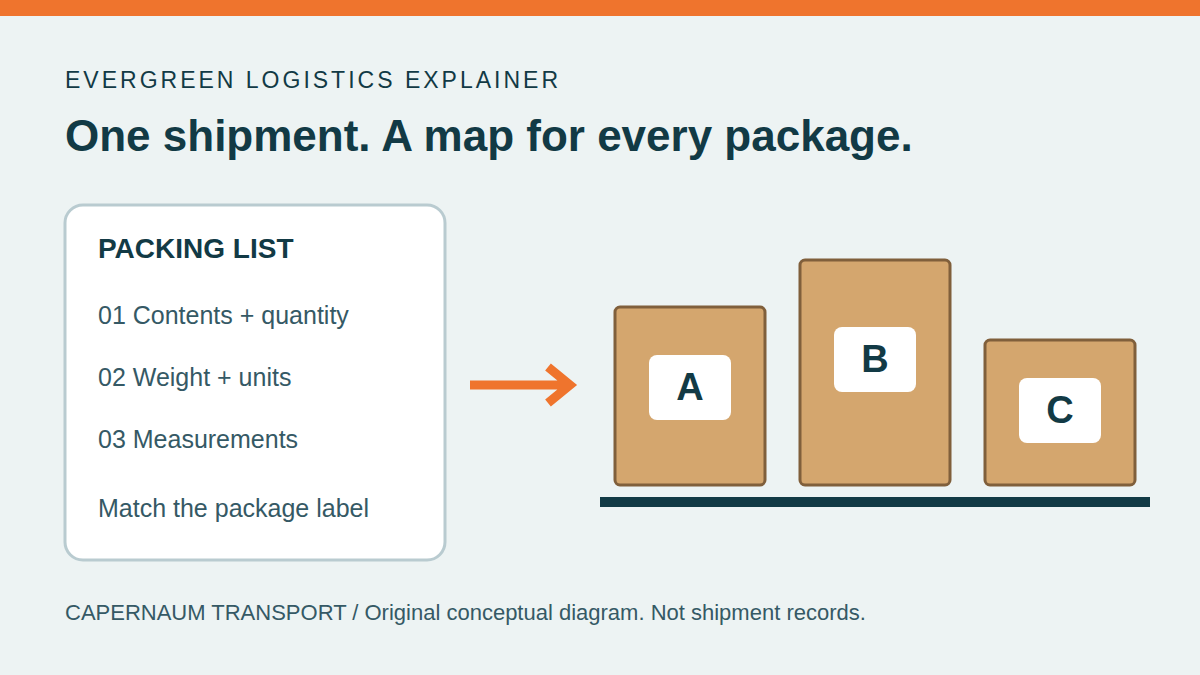
Evergreen logistics explainer. A packing list should help someone answer a practical question: what is inside this particular package? A total shipment quantity alone cannot answer that question when freight is split among cartons or pallets.
The International Trade Administration packing list reference describes a document that itemizes package contents and includes weights, measurements and detailed goods lists. It also explains that freight forwarders use it to determine weights and freight costs, while customs officials use it to check package contents. Those are the sourced foundations of this guide, not a new shipping rule or a current market development.
Build a package map, not just a grand total
Our operational recommendation is to give each physical handling unit a clear identifier and use that same identifier in the packing list. Choose a method that the shipping and receiving teams can both read. A carton number, pallet number or another agreed reference can make the contents traceable without relying on memory.
For example, an illustrative shipment might contain three packages labeled A, B and C. If one product appears in A and C, show the quantity in each package rather than only a combined product total. This is an example of document organization, not a prescribed form or a real customer shipment.
- Package reference: match the document identifier to the label on the physical unit.
- Contents and quantity: describe what belongs in that unit using terms the next team understands.
- Weight and measurements: state the units used and make clear what was measured. Do not mix an individual carton measurement with a whole-pallet measurement without labeling the difference.
- Document reference: identify the shipment and the version being shared so teams do not work from different copies.
The identifier and version practices above are original editorial recommendations. ITA supplies the underlying contents, weight and measurement definition; it does not prescribe this particular checklist.
Keep the commercial invoice distinct
A package map and a commercial invoice answer different questions. ITA commercial invoice reference explains the invoice role in export and import clearance and its use by customs officials in the buyer country to assess duties and taxes. Do not assume that a useful packing list replaces that document.
Use the packing list for the package-level view, then have the responsible shipping team reconcile shared shipment references and descriptions across the documents. Questions about country-specific requirements, classification, duty or clearance belong with the appropriate qualified adviser. This article does not determine which documents a particular shipment legally requires.
Reconcile changes before the next handoff
If cartons are moved between pallets, a once-accurate map may stop describing the freight on the dock. As an operational practice, compare the physical package labels with the current list before releasing the next leg. If there is a discrepancy, identify it and agree who will correct the record rather than silently passing conflicting versions onward.
For transloading or onward domestic distribution, decide in advance who will record repacking changes and share the updated package map. Preserve a clear connection between inbound and outbound units when the operation needs that traceability. This recommendation is about coordination; it is not a claim that every facility offers a particular inventory service.
Keep the pickup and receiving plan alongside the package information, but do not mistake either document for confirmed cargo release or a delivery appointment. Our warehouse preparation guide covers the separate receiving setup. This explainer focuses on the contents map itself.
A simple check before sharing
Can a colleague select one labeled package and find its contents, quantity, weight and measurements in the document without guessing? If not, clarify the map before the handoff. Ask the receiving team which format and references they need rather than assuming that one template works everywhere.
For help discussing a U.S. inland freight move, contact Capernaum with the cargo, origin, destination and timing. Handling arrangements, coverage and price need shipment-specific confirmation. No customs brokerage service, reserved capacity or guaranteed result is announced here.
References and scope
Published 2026-11-01. ITA Packing List and Commercial Invoice reference pages were directly checked November 1, 2026. They are undated reference pages, not November 2026 news releases. The package-content definition and described document uses are attributed above. Package identifiers, version checks and repacking reconciliation are original operational recommendations. No interviews, private records, proprietary rates, regulatory interpretation or publisher images were used.