
A new fleet cybersecurity training resource gives shippers a useful reason to revisit an operational question: who keeps a delivery moving when a provider's normal digital workflow is interrupted? Trucking Dive reported on November 16 that the National Motor Freight Traffic Association created the Fleet Cyber Challenge, a free online resource for transportation professionals to practice identifying and addressing cybersecurity issues.
What the new reporting establishes
According to Trucking Dive, the resource is intended for roles including IT teams, maintenance technicians and diagnostic specialists, and participants can work through exercises at their own pace. The report describes a training environment, not a certification of a carrier's systems or a guarantee that an actual shipment will be protected from disruption.
We checked the full November 16 report. NMFTA's linked announcement and resource pages were unavailable to our source check, so the resource description here is attributed to the independent publication rather than presented as independently tested functionality. We have not enrolled, evaluated the exercises or assessed a transportation provider's security.
The shipper's angle is continuity, not technical testing
For a U.S. shipper arranging a port pickup, warehouse transfer or regional delivery, a provider's participation in training is different from a shipment-specific continuity plan. The practical discussion is what happens to the handoff if the usual portal, status message or scheduling channel cannot be used.
Our recommendation is to keep that discussion focused on responsibilities and communication. It is not a request for passwords, system diagrams or details about vulnerabilities. Do not conduct tests against a provider's systems or vehicle equipment. Technical assessment belongs with authorized specialists; a freight booking conversation should establish the agreed operational response.
Four questions to ask before the next handoff
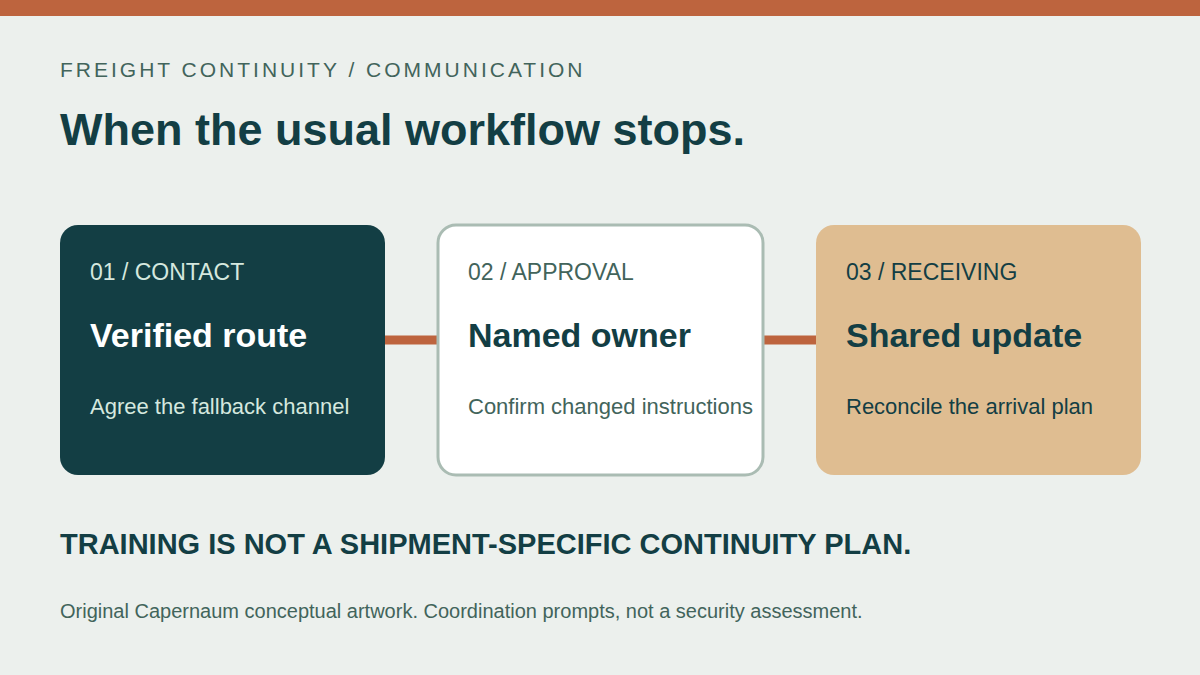
- What is the agreed fallback contact route? Ask which previously verified contact and alternative channel should be used if the normal system becomes unavailable. Record the arrangement before a disruption rather than accepting an unfamiliar instruction as the fallback.
- Who confirms a changed pickup or delivery instruction? Name the person or role responsible for approving an operational change. Keep the proposed change separate from confirmation that it has been accepted.
- What shipment details need reconciling? Agree how the team will identify the affected freight, the last confirmed handoff and the next action. A temporary communication workaround should not quietly change the destination, cargo instructions or delivery scope.
- How will the receiving team be updated? Identify who will communicate an amended arrival plan and who will confirm that the receiver can accept it. Do not treat a revised estimate as an accepted appointment.
These are original coordination recommendations, not NMFTA requirements, a technical security checklist or a promise of uninterrupted service. The appropriate arrangement depends on the shipment and the providers involved.
Do not turn a training announcement into a security claim
The existence of the Fleet Cyber Challenge does not establish that a particular carrier uses it, that its staff have completed it or that its systems are secure. Nor does the report establish an incident affecting a Capernaum customer. We make no such claims.
Use the announcement as a prompt for a practical conversation, not as a badge to attach to a vendor. A provider can explain how it will communicate a disruption without disclosing confidential infrastructure. The shipper can then document the agreed contact path and the limits of any temporary workaround.
For the related distinction between a shipment identifier and evidence of its actual progress, see our guide to freight tracking references and delivery evidence. To discuss a freight movement with Capernaum, share the cargo, lane, timing and known handoff requirements. This article does not imply affiliation with NMFTA or offer cybersecurity consulting.
Sources and reporting scope
Published November 17, 2026. Source: Trucking Dive, “NMFTA creates cybersecurity challenge training resource,” published 2026-11-16, checked November 17. Its accessible full report supports the resource's name, free online format, intended users and self-paced exercises. NMFTA's linked primary announcement and resource returned HTTP 403 during our checks, including one bounded alternative route; we did not bypass access controls. Resource details remain attributed to Trucking Dive. We omit breach-cost estimates, technical exploit descriptions, effectiveness claims and regulatory interpretations. All operational analysis and conceptual artwork are original. No publisher prose, photographs or graphics are reproduced, and no interviews or personal testing are claimed.