
Trans-Pacific rates moved higher in Drewry's October 22 assessment, giving U.S. importers another reason to review the full shipment plan before confirming their inland handoffs. The ocean benchmark is useful context, but it does not tell a warehouse when a particular container will be ready for pickup.
Drewry's dated assessment reported Shanghai-to-Los Angeles rates up 2% to $8,007 per 40-foot container and Shanghai-to-New York rates up 1% to $10,166. FreightWaves reported the same update on October 23.
These are route benchmarks from the October 22 assessment, not Capernaum quotes, a shipment-specific landed cost or a new October 26 price reading.
What changed in the trans-Pacific update
Drewry also reported two announced trans-Pacific blank sailings for the following week, compared with six in the assessment week. It expected trans-Pacific rates to remain stable in the following week, attributing support to strong U.S. import demand. That is Drewry's outlook, not a guarantee of available space or a confirmed sailing for any booking.
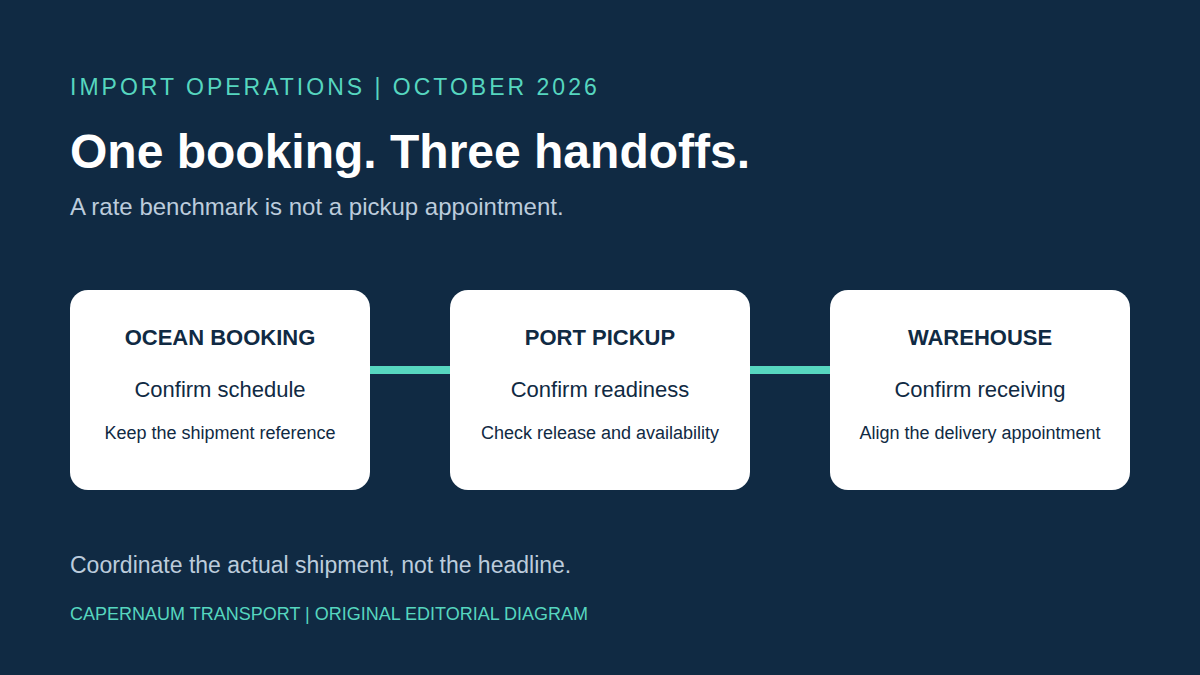
The practical distinction is between market direction and shipment execution. A rate update can help frame a procurement conversation. It cannot confirm the vessel arrival, container release, terminal pickup appointment or warehouse receiving slot for an individual load.
Keep the ocean booking and the receiving plan connected
For an importer moving containers through Newark/Elizabeth or another U.S. gateway, the useful response is to check which downstream arrangements depend on the latest booking details. This is an operational checklist, not evidence that a specific port is congested or that a shipment is delayed.
Before fixing the inland move, confirm:
- The shipment reference and current schedule. Make sure the forwarder, inland provider and receiver are working from the same booking and arrival information. Treat estimates as estimates.
- Pickup readiness. Confirm the shipment's release and availability with the responsible parties before committing a truck to collection. An arrival estimate alone is not pickup clearance.
- The receiving window. Check the delivery appointment, receiving hours and unloading requirements with the actual warehouse. A schedule change should trigger a handoff update, not an assumption that the original slot remains available.
- Any planned transfer. If the shipment uses a transload or cross-dock, confirm the facility appointment, handling requirements and onward vehicle plan separately. Do not treat the ocean booking as confirmation of those services.
Our container-delivery preparation guide explains why receiver readiness belongs in the plan before the truck arrives.
Ask for a shipment-specific breakdown
When comparing options, distinguish the ocean component from inland transportation and any separately quoted handling or storage. Ask what the quote includes, how long it is valid and which operational details could change the final charge. Do not apply an ocean index movement directly to a domestic truck rate or assume it changes an existing agreement.
If a booking changes, a short written update can keep the next handoff clear: the current expected arrival, who will confirm pickup readiness, the receiving appointment and who owns the next status check. The goal is coordination around the actual shipment, not a prediction based on a national or trade-lane headline.
For teams planning an upcoming container move, contact Capernaum with the port, delivery location, cargo details and receiving requirements to discuss the shipment. Coverage, timing and pricing need shipment-specific confirmation.
Source note
Prepared from Drewry's public October 22, 2026 assessment and FreightWaves' October 23 reporting, checked during the October 26 morning research run. Market observations retain their original dates. No interviews, proprietary capacity data or customer results are claimed. The accompanying illustration is an original handoff diagram, not a rate chart or a depiction of live port conditions.
Assessment date: 2026-10-22. Reporting publication date: 2026-10-23.