
XPO is putting premium LTL services at the center of its growth discussion. For shippers, the useful question is not whether a service sounds premium, but which shipment requirements the selected service actually covers.
In its October 29, 2026 report on XPO third-quarter results, Trucking Dive reported that the carrier was pursuing higher-margin freight and expanding its premium-service focus. The publication attributed that strategy to Chairman and CEO Mario Harik. It also reported that XPO was testing additional customer verticals, including healthcare and grocery consolidation.
These are attributed reports about one carrier strategy, not proof that every shipper can book a new service today. The article does not establish availability for a particular lane, handling requirement or delivery deadline. Nor does a carrier earnings discussion establish a market-wide capacity or rate forecast.
What changed, and what did not
The development is XPO management emphasis on service-led growth in its third-quarter discussion, as reported by Trucking Dive. It is not a new shipping regulation, a Capernaum product launch or an announcement of a universal service guarantee. We are not presenting healthcare handling instructions or claiming that a grocery or healthcare shipment qualifies for a particular offering.
Our operational takeaway is to translate the service label into a written requirements brief before choosing the next leg. The recommendations below are Capernaum editorial analysis, not statements that XPO includes these features in any named product.
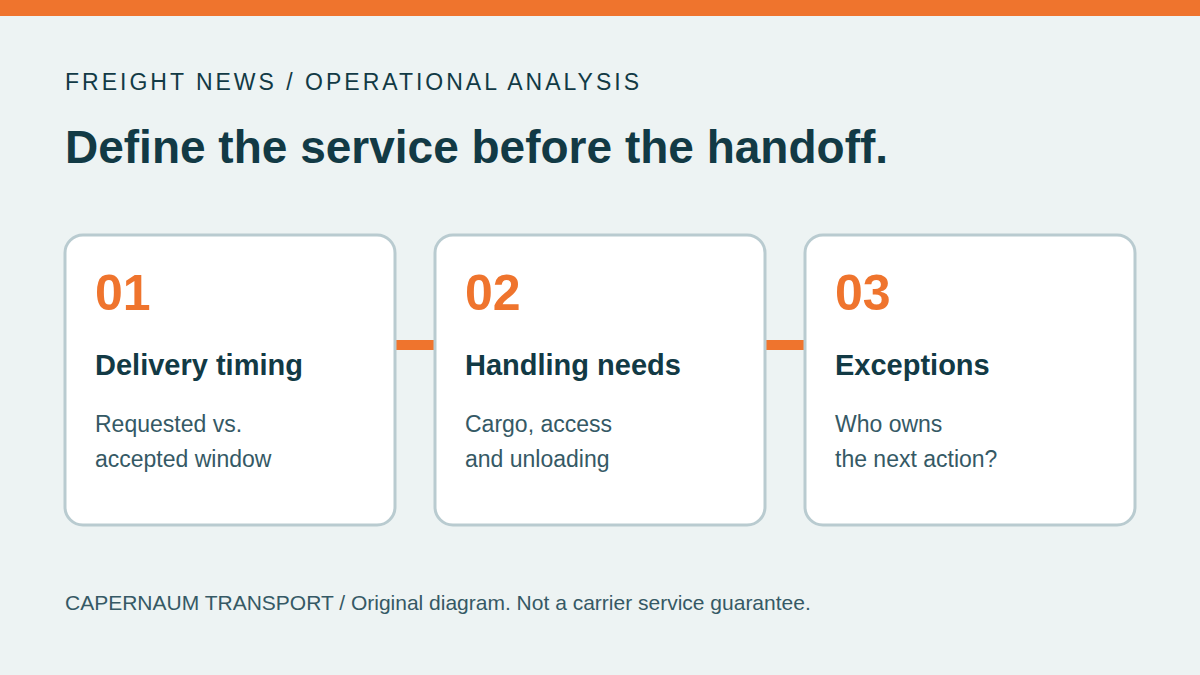
Separate three decisions in the service brief
- Delivery timing: distinguish the date requested by the receiver from the timing the transportation provider has actually accepted. Ask how an appointment is arranged and who confirms it. Do not treat a requested arrival window as an accepted guarantee.
- Handling requirements: describe the physical shipment and the receiving setup. Identify any equipment, access or unloading needs before service selection. A broad description such as premium delivery does not tell the next team what it must physically do.
- Exception ownership: name the contact responsible for a missed appointment, refused delivery or changed receiving instruction. Agree how the shipping and receiving teams will learn that the original plan no longer applies.
Keep the inland handoff in view
For an importer moving freight from a container handoff into domestic LTL, use the same requirements brief across the warehouse and transportation teams. State which outbound units are ready, where they can be collected, and which receiving instructions apply to the next destination. Confirm who owns each step rather than assuming that all parties have the same scope.
Our warehouse preparation guide addresses the receiving setup. This news analysis focuses on the service decision: the warehouse plan and the booked transportation service need to describe a compatible handoff. It does not announce additional warehousing, consolidation or specialized handling capabilities at Capernaum.
Ask for the scope, not just the label
A practical request to a transportation provider is: here is the cargo and receiving plan; which service can accept these requirements, what remains outside its scope, and where is that agreement recorded? Keep the response with the shipment instructions so dispatch, warehouse and receiving contacts can work from the same version.
For a U.S. inland freight discussion, contact Capernaum with the origin, destination, cargo and timing. Coverage, handling arrangements, availability and price require shipment-specific confirmation. No relationship with XPO, reserved capacity or guaranteed result is implied.
Source and reporting scope
Published November 1, 2026. Source: Trucking Dive, published 2026-10-29, directly read November 1. The carrier strategy and named verticals above are attributed to that independent report. The linked company release could not be independently retrieved during this source check, so no additional primary-source claims or financial figures are asserted here. The planning framework is original editorial analysis. No interviews, private shipment records or publisher artwork were used.